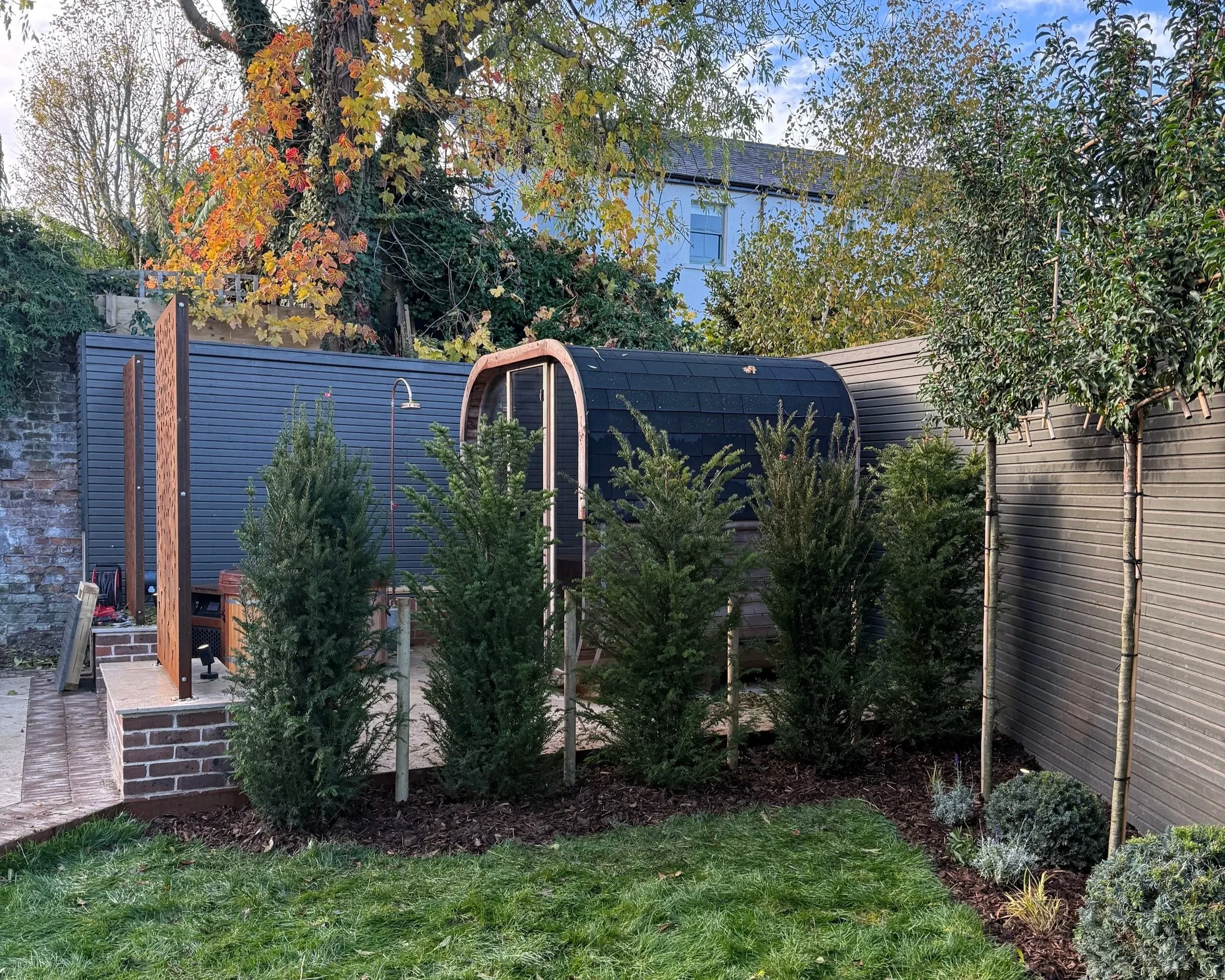
Taxus baccata/Yew root-balled hedge plants recently added at my project in Deal
Why autumn is the smart time to invest in a new hedge.
A good hedge can do a lot for a garden. It can provide privacy, create boundaries, offer shelter from the wind and give structure throughout the year. If you're thinking about planting a new hedge, November is a great time to do it. Choosing the right type of hedging at the right time of year could also save you a considerable amount of money.
Timing is everything
Autumn is my favourite time of year for planting hedges. The Summer heat has calmed down, the soil is generally moist from Autumn rain and there's often still some residual warmth in the ground. These conditions are ideal for establishing new trees and shrubs, allowing their roots to begin developing before the growing season starts again in Spring.
For evergreen hedging such as Taxus baccata (Yew), late October through to mid-December is a good planting window, provided the ground isn't frozen or waterlogged.
Getting to the root of it
When buying hedging plants, you'll generally come across three options: container-grown, bare-root and root-balled.
Root-balled plants are grown in open ground at specialist nurseries before being lifted with a ball of soil around their roots, wrapped in hessian for protection. They're available during the cooler months and typically cost less than equivalent container-grown plants. When you're planting a substantial length of hedging, those savings can really add up.
It doesn't mean compromising on quality, either. Root-balled plants can establish extremely well when planted correctly and given appropriate aftercare.
It's a good example of how understanding plants and their growing cycles can help make a landscaping budget go further.
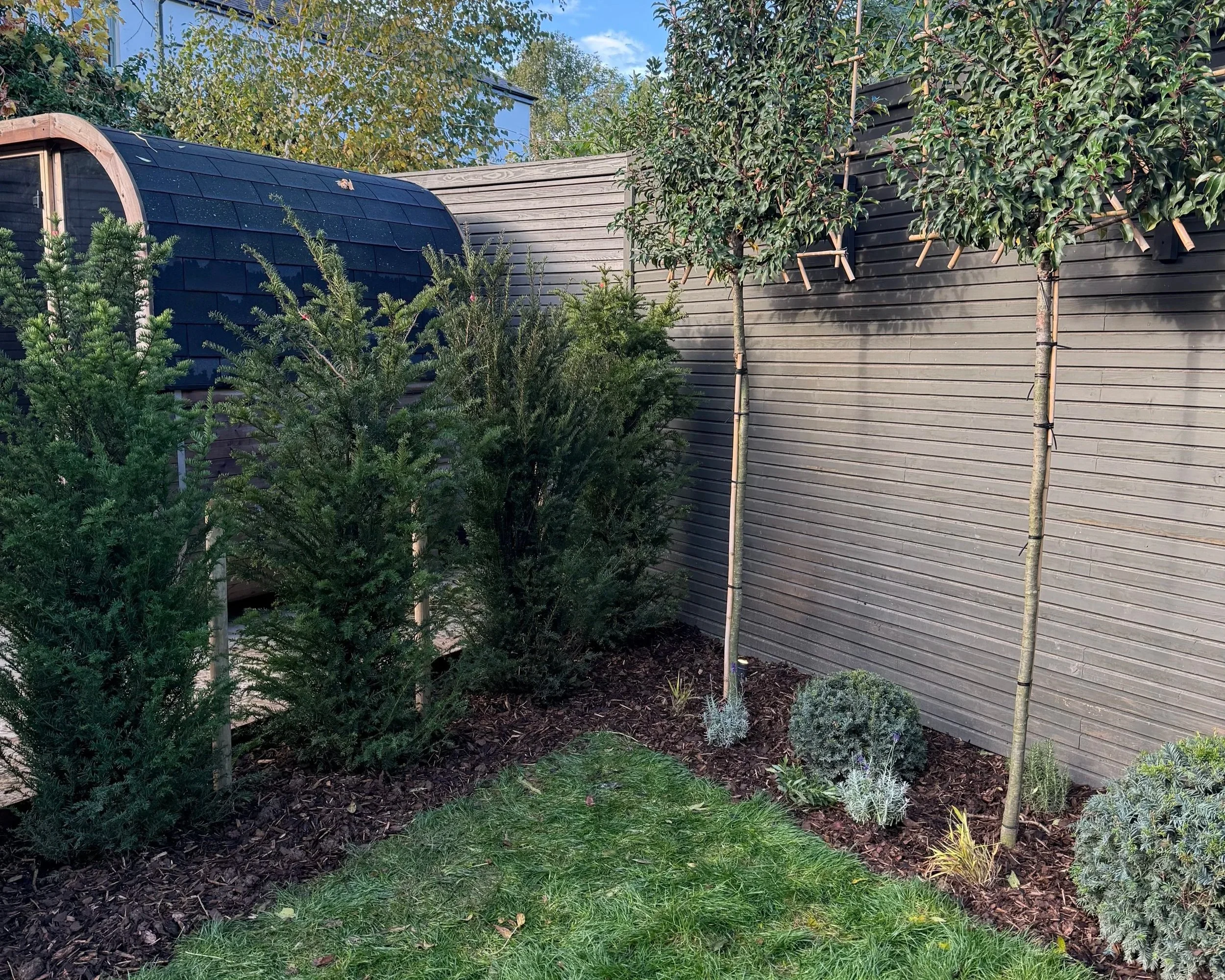
Over time, the Taxus baccata plants will intertwine to create a tight, dense hedge with a classic look.
An English classic, with a contemporary twist
This week, I've been planting a new Taxus baccata hedge at one of my projects in Deal, Kent. The garden surrounds a beautiful Georgian house, so choosing plants that complement its period architecture and features was an important part of my design approach.
Yew felt like a natural choice. Once established and neatly clipped, it will create a classic English hedge that sits comfortably alongside the house.
An enormous, mature Yew tree already stands elsewhere in the garden. Introducing more Yew creates a visual connection between the existing landscape and the new design, helping everything feel as though it belongs.
I've also planted a collection of yew topiary balls in different sizes. They're a traditional choice, so to avoid them feeling overly formal I've combined them with softer planting including Hakonechloa macra, a Japanese forest grass with beautiful arching foliage, and Gaura (Oenothera lindheimeri), whose delicate flowers appear to float above their slender stems. I love the contrast. The strong, sculptural shapes of the yew provide structure and permanence, while the grasses and perennials introduce movement, softness and seasonal change.
The result should feel appropriate to the age and character of the house, but with a more relaxed, contemporary approach to planting.
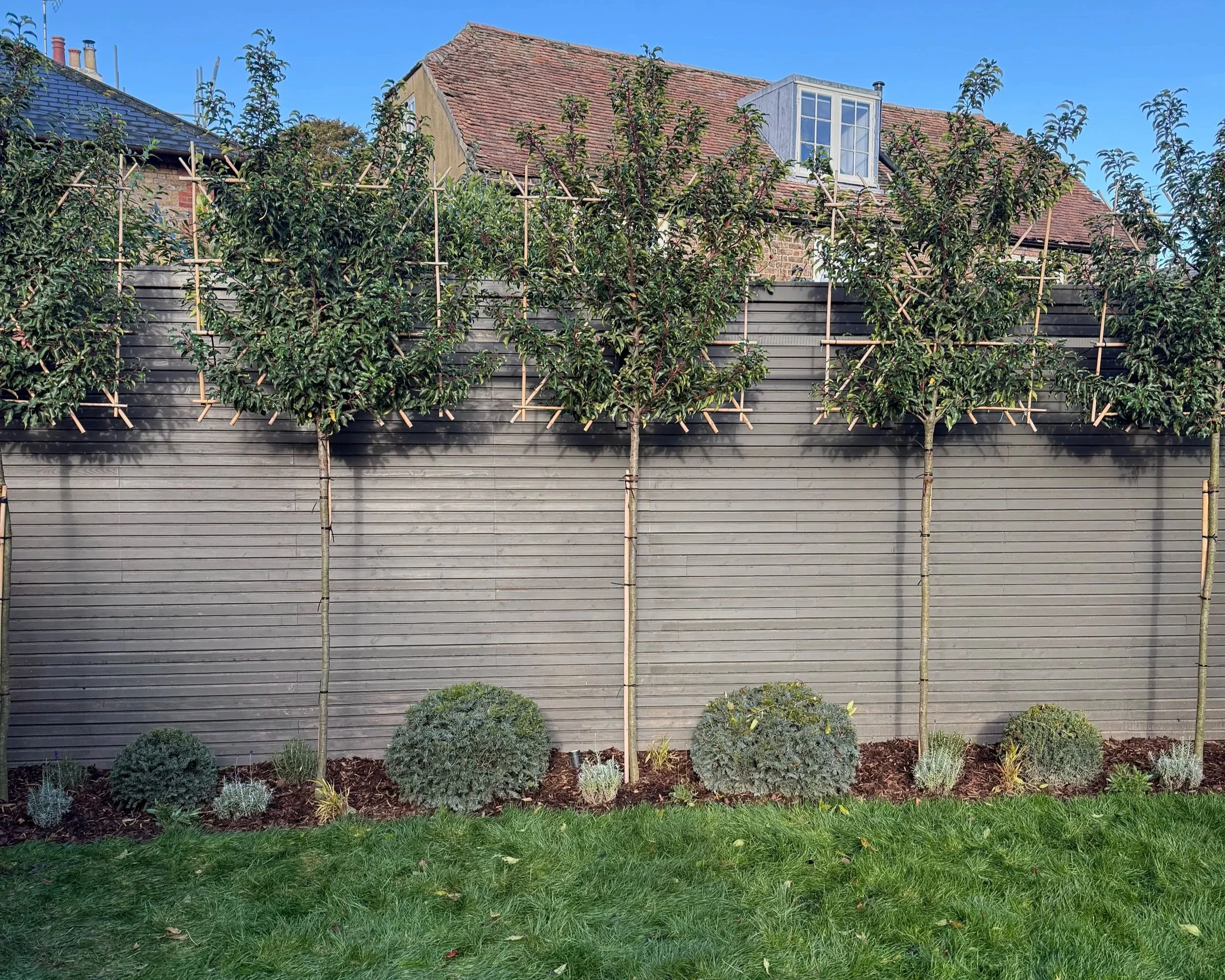
Pleached Portuguese Laural and Yew topiary domes against the newly painted fences in Deal.
A different kind of evergreen
This balance between traditional structure and contemporary planting continues elsewhere in the garden.
I've also introduced pleached Prunus lusitanica (Portuguese Laurel), providing privacy and screening while maintaining a sense of openness beneath the raised canopy. Pleached trees are another classic garden feature, traditionally used to create formal avenues and architectural divisions. I wrote about their history and uses in an earlier Journal article, ‘Life's a Pleach’.
For this project, I particularly liked the contrast between the Portuguese Laurel and the Yew. Where Yew has fine, tightly packed, needle-like foliage, Portuguese Laurel has broader, glossy green leaves and attractive reddish young stems.Together, their different leaf shapes and textures will add interest throughout the year, even when the herbaceous planting has died back. Both provide a strong evergreen framework, but each brings something different to the design.
A garden can respect the history of a building without becoming a period recreation. Sometimes it's the contrast between old and new that makes a design work.
A little planning goes a long way
Choosing the right species, understanding the conditions of the site and getting the planting distances right will all influence how successfully a hedge establishes.
Newly planted hedging also needs attention, even during winter. Watering during dry spells and keeping the surrounding ground free from competing weeds will help give young plants the best possible start.
In Deal, the new Yew hedge will take time to mature, but eventually it will become an integral part of the garden, alongside the established trees, formal topiary and softer planting.
So, if you're planning a garden renovation or considering replacing an existing boundary with something greener, now could be the ideal time to act.
After all, a good hedge isn't just an investment in your garden today. It's something that will continue to grow in value for years to come. And that's what I call a sound investment.
Mark Hardy is a Garden & Landscape Designer creating characterful outside spaces across Kent, London and the South East. If you're planning a garden renovation, including new hedging, screening or structural planting, you can book a design consultation to discuss your project.