Designing gardens in Kent | What the Garden of England can teach us.
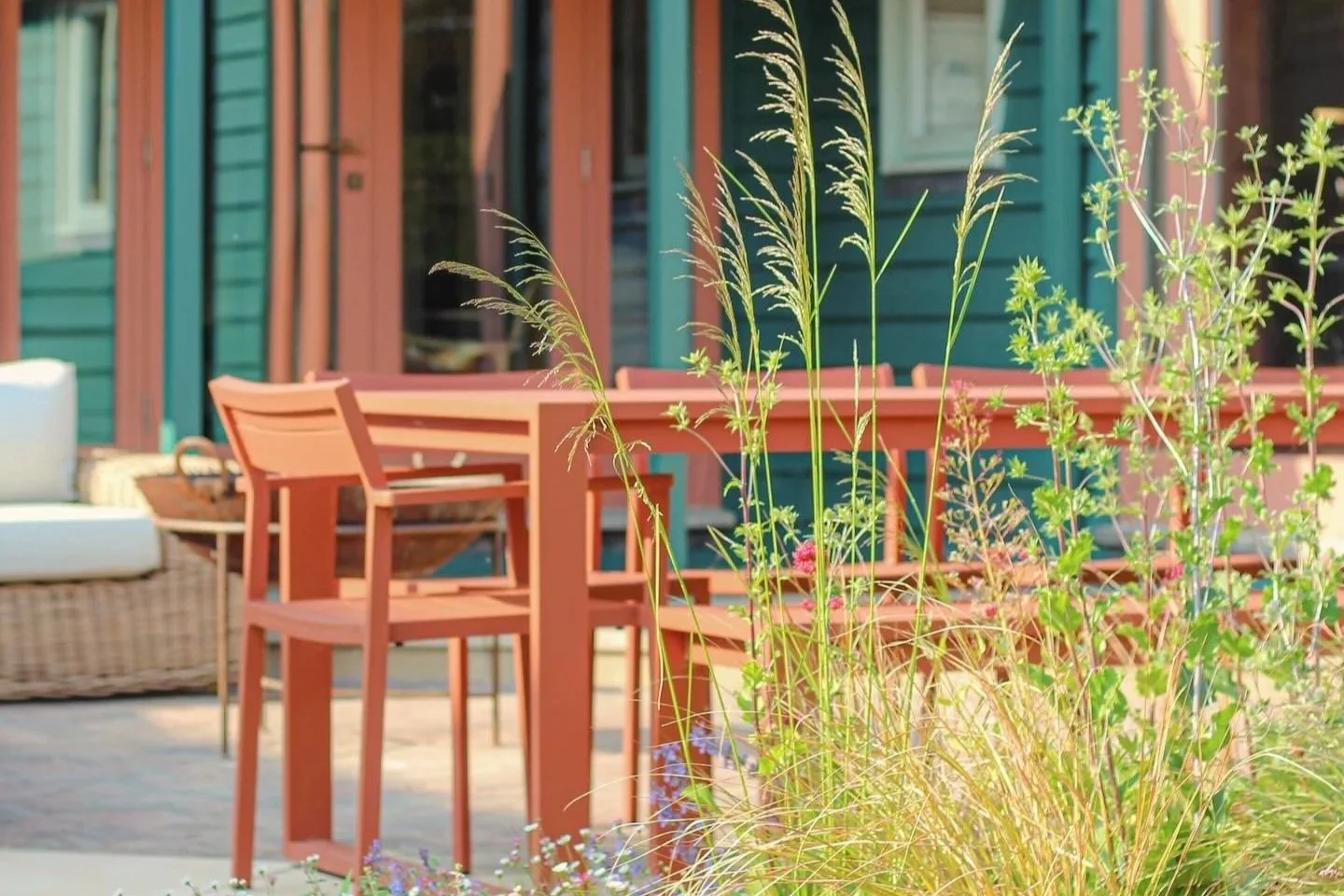
My garden for this contemporary beach house on the East Kent coast includes native planting and natural build materials.
What can Kent, the Garden of England, teach us about garden design?
One of the things I enjoy most about designing gardens in Kent is just how different one part of the county can feel from another. A garden on the coast in Whitstable or Deal can behave very differently from one further inland. Soil changes, exposure changes and the architectural vernacular changes too. Even the light can feel different as you travel around the county. All of these things can, and should, influence how a successful garden design is approached.
Starting with ‘the spirit of a place’
Before I think about any potential design style, planting scheme or materials, I always want to understand the character of the site itself, often known as the ‘genus loci’.
What sort of soil are we dealing with? How exposed is the garden? Where does the sun fall? Is there shelter from neighbouring buildings or mature trees to consider? Does the land hold water or dry out quickly? What can you see beyond the boundary? How does the space present itself and how does one feel when standing in it. There is so much to take in and consider before the design process starts.
In many parts of Kent, heavy clay is a familiar challenge. It can be wet and sticky in winter, hard and cracked in summer and difficult to work if you ignore it. But clay isn’t necessarily bad soil. It can be incredibly fertile and once properly improved, can support a huge range of beautiful planting.
Nearer the coast, things can become much freer draining, windier and more exposed.
The important thing is not to fight what you have. Understand it, respect it and work with it.
Gardens on the Kent coast
Coastal gardens come with their own particular challenges.
Wind is usually one of the first things to consider. Salt-laden air, exposed boundaries and drying conditions all have an impact on which plants are going to thrive. Creating shelter is obviously important, but that doesn’t necessarily mean putting up a solid fence and trying to block everything out. Planting can be used strategically to filter wind, create layers of protection and make a garden feel more enclosed without boxing it in.
One of my East Kent projects, a beach house on the coast, was designed very much with this in mind. The garden needed to feel informal, low maintenance and relaxed enough for a house used mainly at weekends, for family gatherings and summertime entertaining. The planting here, combines native trees and shrubs with grasses and perennials that feel comfortable in an exposed coastal setting. A multi-stem Himalayan birch sits among Anemanthele lessoniana, Nepeta and Centranthus, while dwarf pines provide evergreen structure.
The materials obviously help too. Clay pavers, natural limestone and self-binding gravel were used throughout, with the gravel deliberately allowed to feel loose and informal rather than overly edged and manicured.
This project reinforced something I come back to often. A coastal garden doesn’t need to look ‘seasidey’ or ‘nautical’. It just needs to feel as though it understands where it is and the challenges or opportunities that are present.
Even within Whitstable, gardens can be surprisingly different. Another of my projects there was a beach-front townhouse garden that had become overgrown and difficult for the family to use. Their brief was pretty straightforward: somewhere to relax and entertain, that is easy to look after, without the garden becoming a burden.
My design was a bit more structured, and more formal than the beach house garden. A dining terrace and pergola created a destination within the space, while sandstone, heritage clay pavers and Corten steel gave the design a strong material framework. Around that, ferns, Euphorbia, Rodgersia, Hydrangea quercifolia and Hakonechloa soften the hard landscaping elements and give interest throughout the year.
Another of my Whitstable gardens couldn’t have been more different. This one was steeply sloped and the biggest issue was simply making the garden function. The clients wanted somewhere to work, relax and entertain, alongside a separate artist’s studio. Rather than trying to disguise the slope, my design makes a feature of it. Levels, paths and Corten steel steps take you through the garden, influenced by Japanese and Scandinavian ideas of simplicity and asymmetry. The slope stopped being the problem and became central to the character of the design.
These projects are all in Whitstable, yet the design response to each was completely different.
The house matters just as much as the surrounding landscape
Kent has an extraordinary mix of architectural styles. Georgian and Victorian houses, ancient cottages, 1930s semis, converted Oast houses and modern developments all sit alongside one another.
I’ve spoken before about how important I think the relationship between house and garden is. I don’t see the two as separate things. That was particularly important in the garden designed over in Margate. The owners had completely renovated the house and opened-up the kitchen & dining area with new bi-fold doors. Suddenly the garden was very visible from inside, so the design outside needed to feel like a natural continuation of the house.
My clients wanted something easy to maintain, somewhere to relax and entertain, with a contemporary coastal feel. The dining terrace sits immediately outside the kitchen, while a second seating area beneath an existing fig tree gives you another reason to move further into the garden. The planting is deliberately manageable, with easy care shrubs, grasses and perennials to give plenty of Summer interest.
That inside-out relationship comes up more and more in my work. I find clients aren’t simply asking me to make their garden look better. They want it to feel like an integral part of their home.
Older properties pose different questions
Period houses need a different response again.
There can sometimes be a temptation to make the garden feel equally historic. That’s not really my design style. A contemporary garden can sit beautifully alongside an old building. In fact, I often think the contrast makes both more interesting, providing the proportions, materials and planting have been properly considered.
My Oast House project is a good example. The building already has so much character that the garden doesn’t need to compete with it. Instead, the design needs to complement the architecture, acknowledge the wider agricultural landscape and create a stronger relationship between the house and the space around it.
This is where materials become really important. I find myself using brick, clay pavers, reclaimed timber and weathering steel a lot in Kent gardens. Not because there is a prescribed ‘Kent palette’, but because they sit comfortably alongside the architecture here and, importantly, they age well. I like materials that settle into a garden. A bit of weathering, moss, patina or wear generally makes them better over time.
Gardens are expected to give more
One of the biggest changes I see in client briefs is just how much they now expect from their gardens.
They need to work for eating, relaxing and entertaining. They need to look good from the kitchen window in February as well as from the terrace in June. Clients want privacy without losing light, plenty of planting without spending every weekend looking after it, and increasingly they want gardens that support wildlife and cope better with the hotter, drier summers we are now experiencing. There are lots of competing demands there, which is part of what makes the design process so interesting.
The Whitstable townhouse, the Margate terrace and the East Kent beach house are very different gardens, but underneath it all they were asking essentially the same question:
How can this outside space improve everyday life at home?
That, for me, is where good garden design becomes much more than simply making something look nice.
Every garden teaches me something
That is probably the thing I enjoy most about what I do; You never quite know what the next project is going to ask of you. It might be exposed and windswept. It might sit on heavy clay beneath mature trees. It might have a seemingly impossible slope, a beautiful old wall worth keeping, an awkward view that needs disguising or simply need to work much harder for a busy family.
The landscape changes. The architecture changes. The brief changes.
There really isn’t a formula for designing a garden in Kent. The starting point, though, is always the same.